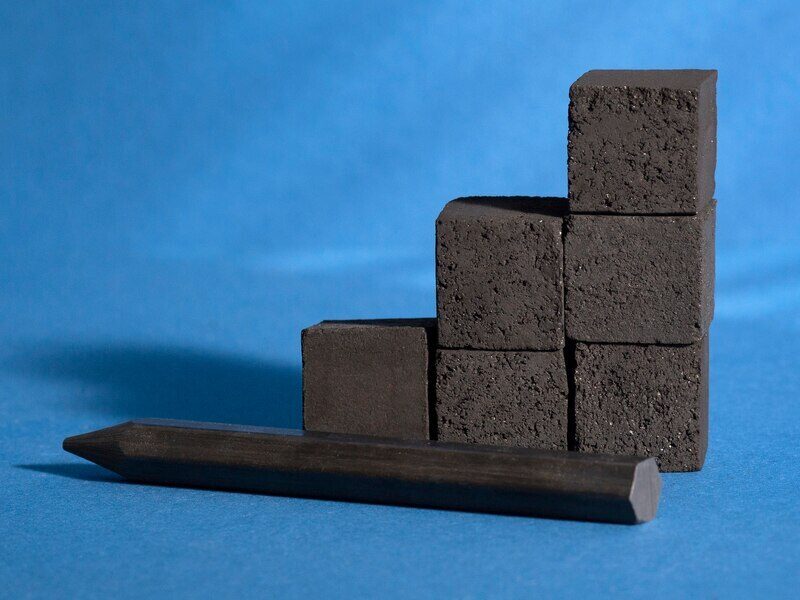
Briquette particle size optimization, briquettes compacted forms of biomass materials, have emerged as a sustainable and renewable energy source for various applications, including heating, cooking, and electricity generation.
The particle size of biomass feedstock used in briquette production plays a critical role in determining the quality, combustion efficiency, and overall performance of the final product.
In this article, we explore the significance of optimizing briquette particle size, innovative techniques, and practical considerations aimed at improving biomass fuel production and utilization.
Briquette Particle Size Optimization
Briquette particle size optimization involves selecting and processing biomass feedstock to achieve uniform particle dimensions and characteristics conducive to efficient compaction and combustion.
The particle size distribution influences key factors such as bulk density, porosity, moisture retention, and mechanical strength, which in turn impact the handling, storage, and combustion properties of briquettes.
Importance of Briquette Particle Size Optimization
Optimizing briquette particle size offers several benefits for biomass fuel production:
1. Compaction Efficiency: Uniform particle size distribution facilitates uniform compaction and densification during briquette formation, resulting in higher bulk density and mechanical strength.
2. Combustion Performance: Properly sized particles ensure consistent airflow and fuel-to-air ratios during combustion, promoting complete combustion and minimizing emissions such as smoke, ash, and pollutants.
3. Storage Stability: Optimized particle size reduces void spaces and improves interparticle contact, enhancing the stability and flowability of briquettes during storage and transportation.
4. Fuel Handling: Uniform particle size simplifies handling and processing operations, reducing energy consumption and equipment wear during grinding, drying, and briquetting processes.
Techniques for Briquette Particle Size Optimization
Several techniques and methods can be employed to optimize briquette particle size:
1. Grinding and Milling: Mechanical grinding and milling processes are used to reduce biomass feedstock into smaller particles with desired size distributions. Hammer mills, disc mills, and ball mills are commonly used equipment for particle size reduction.
2. Screening and Sieving: Screening and sieving techniques are utilized to separate biomass particles into distinct size fractions based on specific size criteria. Vibrating screens, sieving machines, and air classifiers are employed to achieve desired particle size distributions.
3. Particle Size Analysis: Particle size analysis methods, such as laser diffraction, sieve analysis, and image analysis, are employed to quantify particle size distribution and characterize the uniformity and consistency of biomass feedstock.
4. Optimization Algorithms: Mathematical models and optimization algorithms, such as response surface methodology (RSM) and genetic algorithms, can be applied to identify optimal processing conditions and particle size parameters for maximizing briquette quality and performance.
Practical Considerations and Challenges
Despite its potential benefits, briquette particle size optimization presents certain practical considerations and challenges:
1. Feedstock Variability: Biomass feedstock composition and properties may vary depending on factors such as species, moisture content, and processing methods, posing challenges to achieving consistent particle size distributions.
2. Equipment Limitations: Particle size reduction equipment and machinery have limitations in terms of throughput, energy consumption, and maintenance requirements, which may impact the scalability and cost-effectiveness of briquette production processes.
3. Process Integration: Integrating particle size optimization with other process parameters, such as moisture content, binder selection, and compaction pressure, requires careful coordination and optimization to achieve desired briquette properties.
4. Economic Viability: The cost-effectiveness of particle size optimization strategies depends on factors such as capital investment, operating costs, market demand, and regulatory compliance, which must be carefully evaluated and balanced.
Conclusion
In conclusion, optimizing briquette particle size is a critical aspect of biomass fuel production, with significant implications for efficiency, performance, and sustainability. By selecting and processing biomass feedstock to achieve uniform particle size distributions, producers can enhance compaction efficiency, combustion performance, and storage stability of briquettes.
Innovative techniques such as grinding, screening, particle size analysis, and optimization algorithms offer opportunities to maximize the quality and value of biomass fuel products.
As the demand for renewable energy sources continues to grow, the optimization of briquette particle size will remain a key focus area for research, innovation, and industry development.
Collaborative efforts between researchers, manufacturers, policymakers, and end-users are essential for advancing particle size optimization technologies, overcoming technical challenges, and promoting the adoption of sustainable biomass fuel solutions.
By harnessing the potential of optimized particle size distributions, we can accelerate the transition towards a cleaner, greener, and more resilient energy future for generations to come.
Learning about coconut briquette, you also have to know the contents of coconut briquettes. The contents of coconut briquettes are carbon, ash and volatile components.
Briquettes are usually used for cooking and baking processes. Steam power plants can also use briquettes to produce electrical energy which can replace coal fuel.