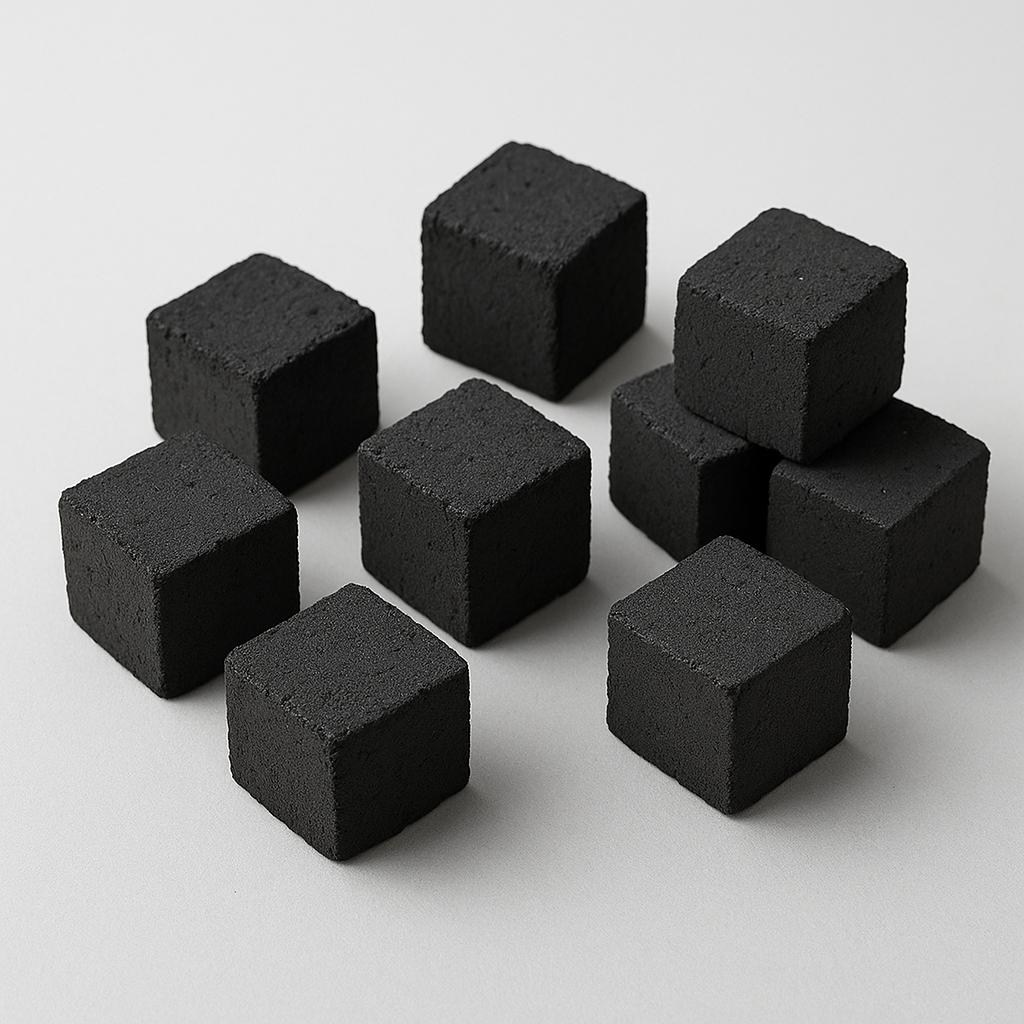
Coconut charcoal review helps buyers understand product quality before making purchasing decisions. Many distributors seek reliable and consistent fuel sources. Therefore, detailed evaluation becomes essential for long term partnerships. Moreover, proper assessment improves business credibility and customer trust.
Coconut shell briquettes come from carbonized agricultural waste. Manufacturers process coconut shells into high density charcoal blocks. As a result, the product offers longer burning time. In addition, it produces lower ash compared to traditional wood charcoal.
Coconut Charcoal Review Heat Performance and Burning Duration
Coconut charcoal review highlights its stable and consistent heat output. The briquettes contain high fixed carbon levels. Therefore, they burn longer and more evenly. This consistency supports professional grilling and hookah operations.
Moreover, uniform cube shapes improve airflow control. As a result, users manage temperature more precisely. In addition, minimal smoke production keeps the air cleaner. Consequently, restaurants and lounges prefer coconut based briquettes for reliable performance.
Review Ash Content and Cleanliness
Coconut charcoal review also focuses on ash residue levels. High quality briquettes generate low ash after combustion. Consequently, cleaning becomes easier and faster. This factor saves operational time for businesses.
Furthermore, low ash prevents airflow blockage inside grills. Therefore, combustion remains stable throughout the session. In addition, the briquettes maintain structural integrity until fully burned.
Many professionals recommend Coconut charcoal cubes for consistent results. The cube shape supports balanced heat distribution. Moreover, dense structure extends burning duration significantly. As a result, users reduce frequent refueling.
Coconut Charcoal Review Sustainability and Environmental Benefits
Coconut charcoal review highlights strong environmental benefits. Producers use renewable coconut shells as raw materials. Therefore, the product supports sustainable fuel production. Moreover, recycling agricultural waste reduces overall environmental impact.
In addition, coconut shell charcoal produces less smoke and residue. Cleaner combustion lowers air pollution during use. Consequently, eco conscious businesses prefer this sustainable fuel option.
Coconut Charcoal Review for Export and Commercial Use
Coconut charcoal review becomes even more important in export markets. International buyers demand strict quality standards. Therefore, suppliers must ensure consistent density and low moisture content. Moreover, proper packaging protects products during shipment.
At jacoid.com, buyers can explore premium coconut shell charcoal briquettes. The company provides detailed specifications and export documentation. Furthermore, jacoid.com implements strict quality control procedures. As a result, distributors receive uniform and reliable products.
Transparent product information strengthens buyer confidence. Consequently, long term partnerships become easier to establish. In addition, consistent supply supports stable business growth.
Important Quality Indicators to Evaluate Before Purchase
First, evaluate fixed carbon percentage carefully. Higher carbon ensures longer burning duration. Second, review ash content levels before purchase. Lower ash improves cleanliness and airflow stability.
Next, check moisture content precisely. Low moisture guarantees faster ignition and minimal smoke. Moreover, examine briquette hardness and density. Strong structure prevents breakage during transportation.
By focusing on these indicators, buyers minimize risks. Consequently, they secure high performance fuel products consistently.
Conclusion
Coconut charcoal review provides valuable insights into heat stability, ash levels, and overall durability. High quality briquettes offer long lasting and efficient performance. Moreover, trusted suppliers like jacoid.com ensure consistent standards for global markets. Therefore, businesses can confidently invest in coconut shell charcoal for sustainable and profitable operations.